On this page +
This was my first race since my 2:52:53 debut at the Houston Marathon. It was a tune-up on the road back to Houston in January, where my goal is 2:45. (What the result means for that goal.)
The goal: sub-1:25 (6:29 per mile)
A sub-1:25 half marathon means averaging 6:29 per mile (4:02 per km) for 13.1 miles. There's almost no slack in that number. 13.1 miles at 6:29 is about 1:24:56, so one bad mile can take the whole margin.
Going in, the training was done:
- Last long run: 19 miles
- Taper week: 28 miles
The night before, I said I'd be happy with 1:30 and was hoping for sub-1:25. The race ended up in the middle of those two numbers. It was a lot closer to the goal than to the safety net.
My race-day kit
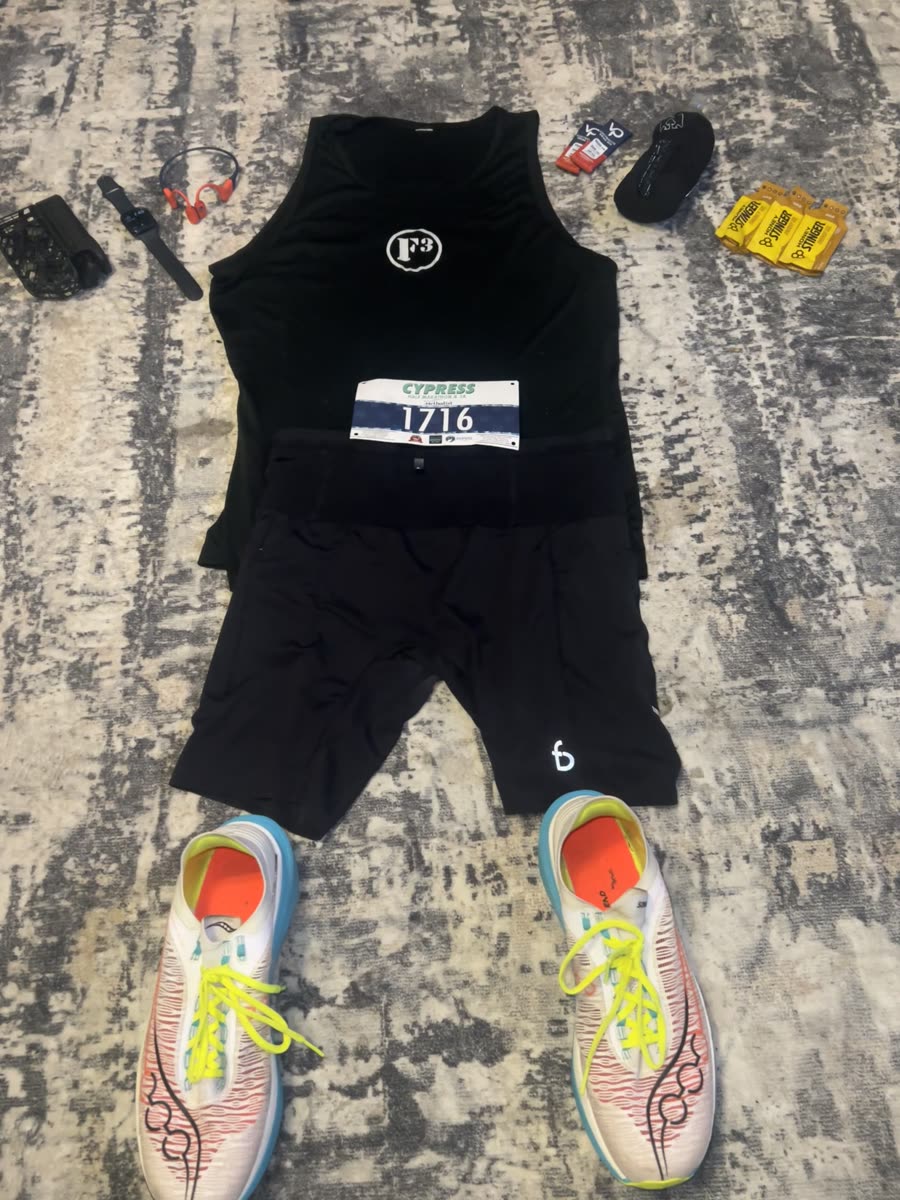
- Shoes: Saucony Endorphin Elite 2, a carbon-plated race shoe
- Hydration: Nathan ExoDraw 2.0 handheld. I don't like anything strapped to me, and this one doesn't drip. (Full review)
- Fuel: 3 Honey Stinger Gold energy gels, plus 2 Venture Pal electrolyte drink-mix packets
- Shorts: FlipBelt compression shorts with built-in gel storage
- Audio: Shokz OpenSwim Pro open-ear headphones
- Watch: Apple Watch Series 9
- Top: F3 tank, repping the crew
More of what I train and race in is on the Victory Fitness gear page.
Race morning

At 6:45 a.m. I was at the start area with the gun 15 minutes out. I'd already done my warm-up skips by the tents.
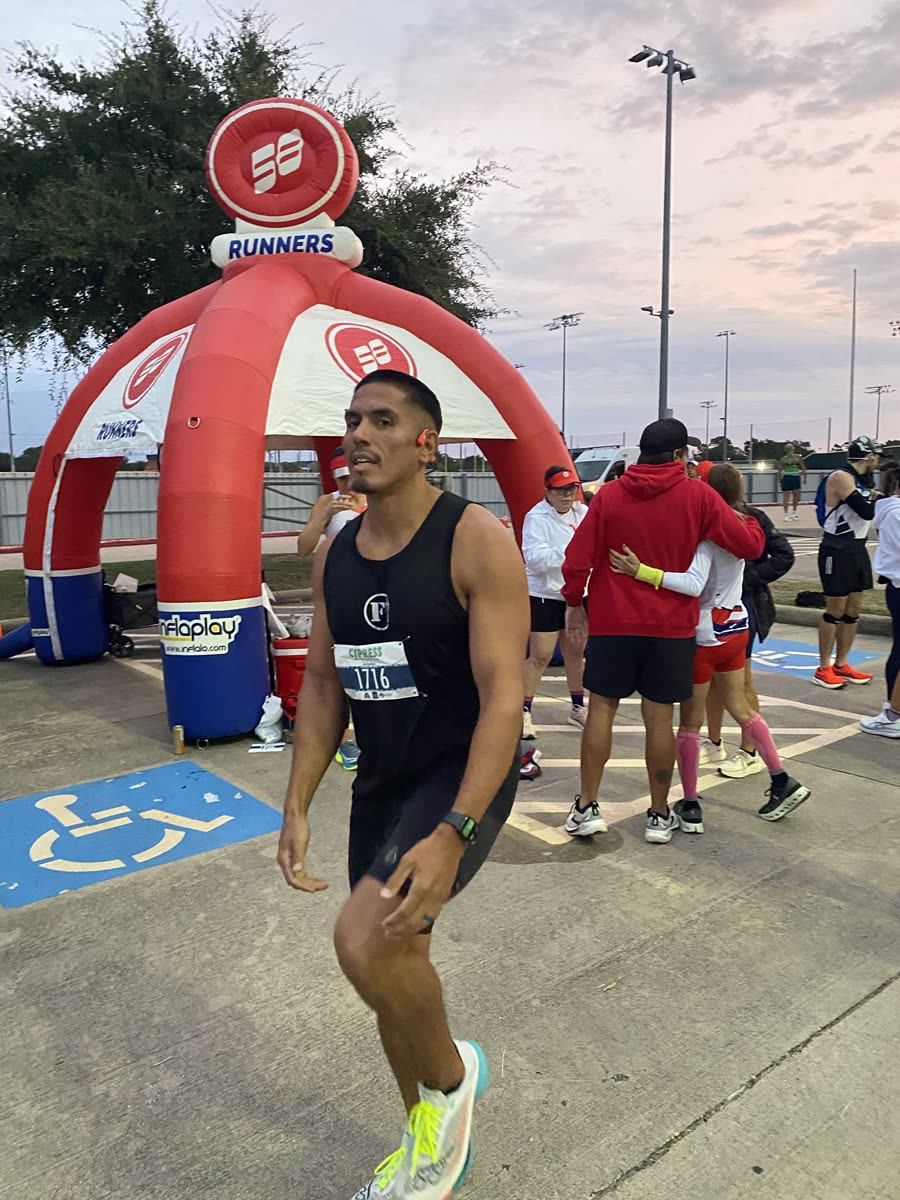
The start-corral mistake: lined up at the 9:10 sign
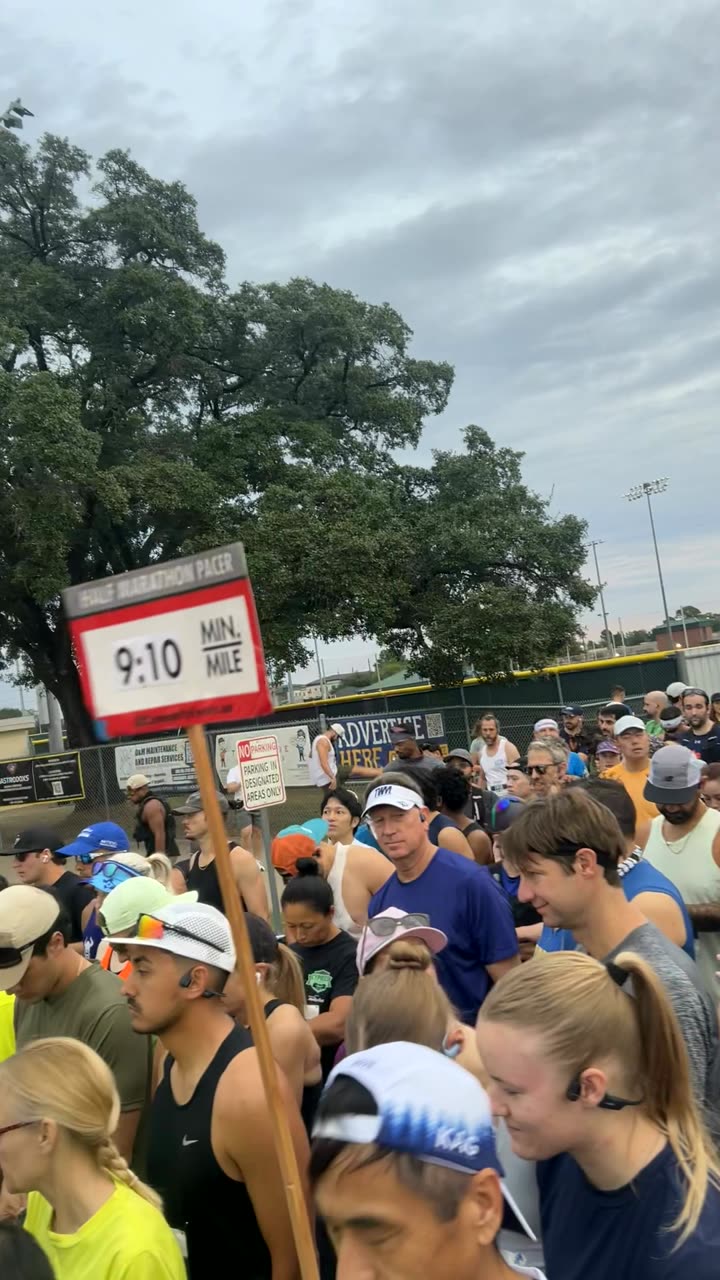
I tried to work my way to the front and couldn't. When the countdown hit "let's go," I was standing next to the 9:10-per-mile pace sign, about 2:40 per mile slower than my goal pace.
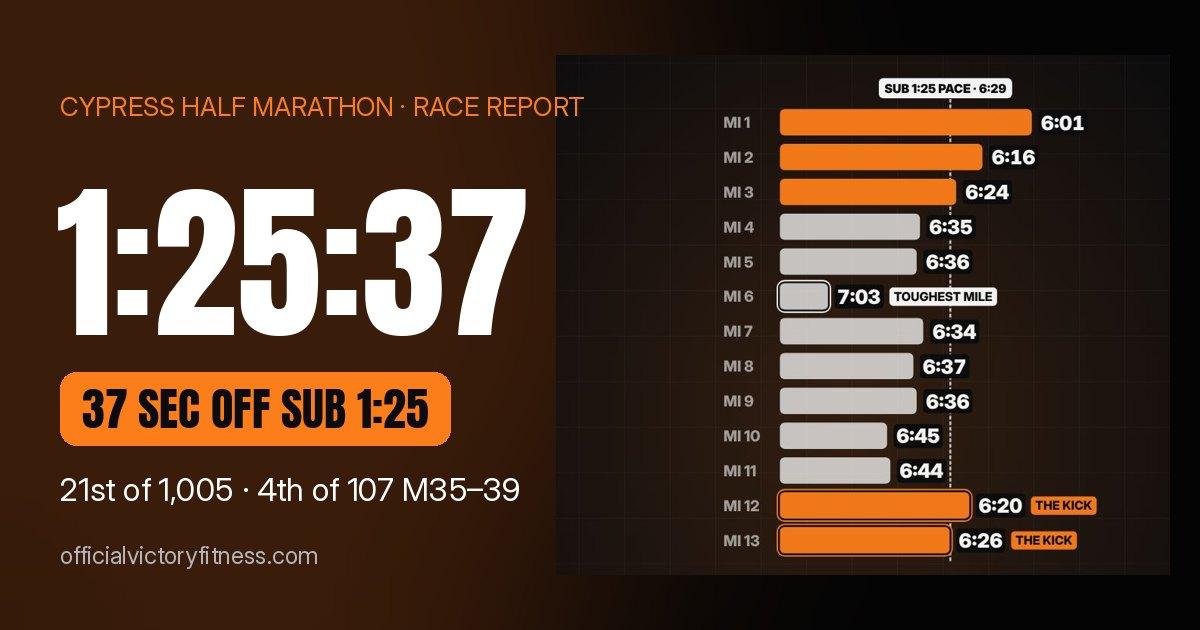
The results show the cost. My gun time was 1:26:18 and my chip time was 1:25:37, so it took about 41 seconds just to reach the start mat. Chip time doesn't count those 41 seconds. What it does count is the weaving and surging around slower runners in the first mile.
Lesson: get to the corral early and line up with your pace. That matters even more at races that give out awards by gun time.
Mile-by-mile splits (official chip times)
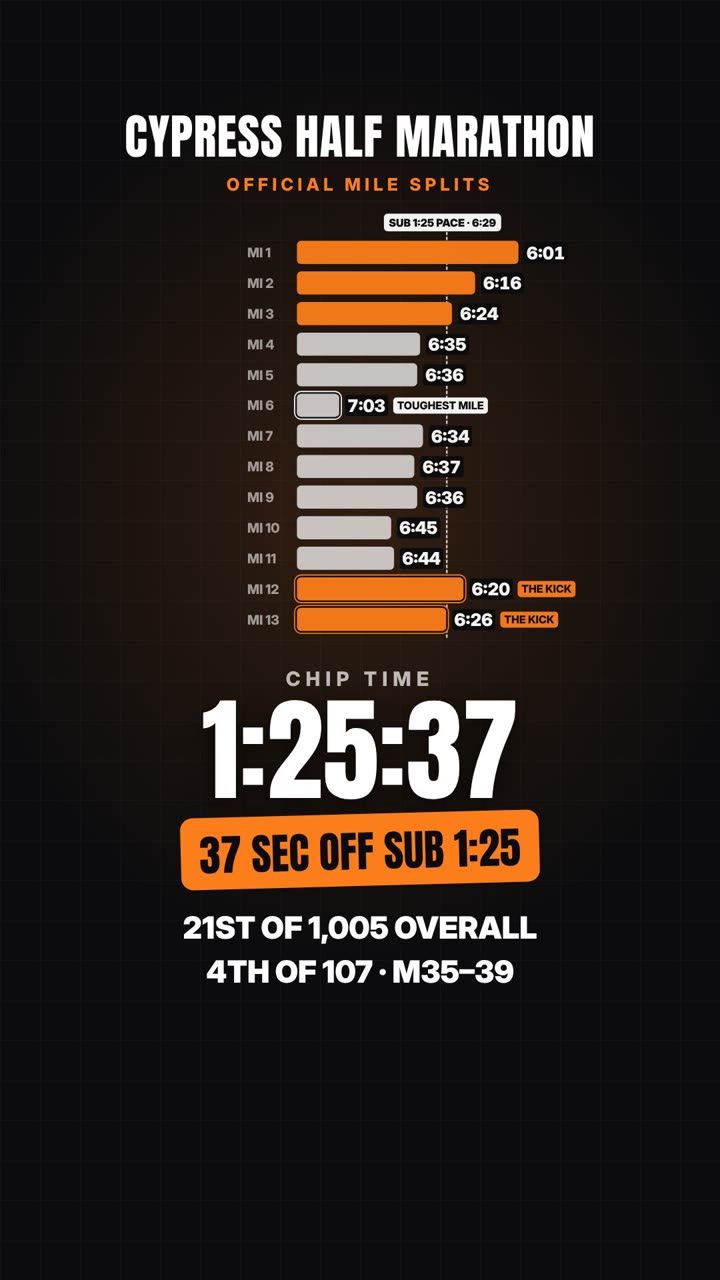
These are the official splits from the timing mats. My watch's GPS splits differ by a few seconds, which is normal.
- Mile 1: 6:01. 28 seconds faster than goal pace, starting from the back of the corral
- Mile 2: 6:16
- Mile 3: 6:24
- Mile 4: 6:35
- Mile 5: 6:36
- Mile 6: 7:03. My toughest mile, 34 seconds over goal pace
- Mile 7: 6:34
- Mile 8: 6:37
- Mile 9: 6:36
- Mile 10: 6:45
- Mile 11: 6:44
- Mile 12: 6:20. The kick starts
- Mile 13: 6:26
- Finish: 1:25:37 chip, 6:32 average
I called out my first five splits on camera mid-race. Those clips are in the race-day Shorts.
Where the 37 seconds went
Here's what the splits say:
- I banked time early. Miles 1–3 were 28, 13 and 5 seconds under goal pace. That felt like a cushion, but in a half marathon a fast first mile usually gets paid back later.
- Mile 6 cost 34 seconds by itself. That's almost the entire miss in one mile.
- Miles 4–11 drifted 5–16 seconds per mile over goal pace. No single one looks bad, but together they add up.
- The finish was strong. 6:20 and 6:26 for miles 12–13 means there was something left. Some of that energy belonged in the middle miles.
An average of 6:32 against a 6:29 goal is 3 seconds per mile. Over 13.1 miles that's 37 seconds.
What I'd do differently
- Line up by pace, early. The whole race started 41 seconds behind the gun and in traffic.
- Run the first mile at goal pace, not 28 seconds under it. Even pacing is cheaper than banking time.
- Plan for the hard mile. Every course has one. Know where it is, and accept losing a few seconds there instead of 34.
- Start the push earlier. If you can run 6:20 at mile 12, you can hold 6:29 at miles 9–11.
The result and what's next
21st of 1,005 and 4th in my age group is a race I'm proud of, even 37 seconds short. And the best part was waiting at the finish line: my family.
Next up is the Houston Marathon in January, with a goal of 2:45. If you're building toward your own marathon, start with the complete sub-3 marathon guide. The Victory Fitness app is what I use to build and track my training.
Some links above are affiliate links. As an Amazon Associate I earn from qualifying purchases, at no extra cost to you.
Frequently asked questions
What pace do you need to run a sub-1:25 half marathon?
An average of 6:29 per mile (about 4:02 per kilometer). 13.1 miles at 6:29 is roughly 1:24:56, so you have only a few seconds of total margin. I averaged 6:32 per mile and finished in 1:25:37.
What was Victor Sauceda's time at the 2026 Cypress Half Marathon?
1:25:37 chip time (6:32 per mile), 21st overall out of 1,005 finishers and 4th of 107 in the men's 35–39 age group. His gun time was 1:26:18.
What is the difference between chip time and gun time?
Gun time starts when the race starts. Chip time starts when you cross the start mat. At the Cypress Half my gun time was 1:26:18 and my chip time was 1:25:37, so it took me about 41 seconds just to reach the start line from where I lined up. Age-group awards often use gun time.
Does lining up at the back of the start corral slow you down?
Your chip time does not start until you cross the mat, but starting behind slower runners means weaving, surging and wasted energy in the first mile. Line up with the pace group that matches your goal pace, and get to the corral early.
How should you pace a half marathon?
Aim for even splits within a few seconds of goal pace. Running the first mile far under goal pace borrows time you usually pay back later. Plan for the hardest mile of the course and save a measured push for the last two miles.

Written by
Victor Sauceda
Founder of Victory Fitness. Ran a 2:52:53 debut marathon at 36 while working full-time and raising two kids, and builds the app he trains with.
More about Victor