The Beginning
I'm not a professional runner. I'm a 36-year-old software engineer with a full-time job, a business to run, and two kids at home. Sound familiar?
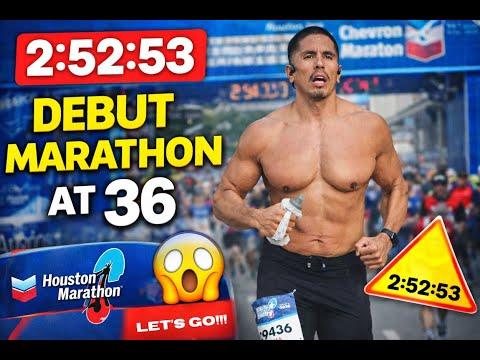
When I decided to run my first marathon, I didn't have unlimited time or resources. I needed a system that was efficient, effective, and fit into real life. The result? 2:52:53—17 minutes under the Boston Qualifier.
Here's exactly how I did it.
The Foundation: Build a Base First
Before starting marathon-specific training, I spent 12 weeks building a solid aerobic base. This meant:
- 40-50 miles per week of easy running
- No speed work—just comfortable, conversational pace
- One long run increasing to 16 miles
- Focus on consistency, not intensity
This base phase is critical. It's boring, but it works. Your aerobic system needs this foundation before you can handle the intensity of marathon training.
The 21-week Training Plan
Once my base was solid, I started a 21-week marathon-specific block. The structure was simple but effective:
Weekly Structure
- Monday: Easy run (6-8 miles)
- Tuesday: Workout day (tempo, intervals, or marathon pace)
- Wednesday: Easy run (6-8 miles)
- Thursday: Medium-long run (8-12 miles)
- Friday: Rest or easy 4 miles
- Saturday: Workout or easy run
- Sunday: Long run (14-22 miles)
Peak mileage: 60 miles per week for 4 weeks, then taper.
Key Workouts
The workouts that made the biggest difference:
- Tempo Runs: 2-3 miles warm-up, 6-8 miles at half-marathon pace, 2 miles cool-down
- Marathon Pace Runs: 3 miles warm-up, 10-14 miles at goal marathon pace, 2 miles cool-down
- Long Runs: 16-22 miles, mostly easy with occasional marathon pace segments
- Interval Work: 400m-1200m repeats at 5K-10K pace with equal recovery
Nutrition Strategy
Fueling was critical. Here's what worked:
Daily Nutrition
- High carb, moderate protein, low fat during peak training
- 400-500g carbs per day during hard weeks
- Protein after every run—30g within 30 minutes
- Hydration: Half my body weight in ounces daily
Race Day Fueling
- Pre-race: Bagel with peanut butter 2.5 hours before start
- During race: Maurten Gel every 30 minutes starting at mile 5
- Target: 60-90g carbs per hour
- Water: Every aid station, 4-6 oz
I practiced this exact strategy on every long run. Never try something new on race day.
Recovery Protocol
Training hard is only half the equation. Recovery is where the adaptations happen:
- Sleep: 8-9 hours per night, non-negotiable
- Foam rolling: 15-20 minutes every evening
- Easy days truly easy: Conversational pace, no ego
- One complete rest day per week
- Massage gun on tight muscles
The Taper
The final two weeks were crucial. I scaled back mileage but maintained intensity:
- Week -2: 70% of peak mileage with one workout
- Week -1: 50% of peak mileage with one sharp session
- Last 3 days: Easy running only, lots of carbs, lots of sleep
Tapering is hard psychologically. You feel restless. Trust the process.
Race Day Execution
The plan was simple: 6:35/mile pace for the entire race.
Splits
- 5K: 20:28 (right on pace)
- 10K: 41:02 (slightly fast but felt good)
- Half: 1:26:10 (6:34 average—perfect)
- 30K: 2:02:45 (still on pace)
- 35K: 2:23:15 (starting to hurt but holding)
- 40K: 2:43:58 (gritting it out)
- Finish: 2:52:53 (6:36 average)
I executed the pacing plan almost perfectly. The last 10K was brutal, but that's marathon running.
Key Lessons
Looking back, here's what made the difference:
- Consistency beats intensity. Show up every day. Trust the process.
- Build your base first. Don't skip the foundation phase.
- Nail the key workouts. Easy days easy, hard days hard.
- Practice everything. Nutrition, pacing, race-day routine—rehearse it all.
- Recovery is training. Sleep, fuel, and rest are not optional.
- Trust your taper. The work is done. Rest and execute.
The System Works
This wasn't luck. It wasn't genetics. It was a smart, structured training plan executed consistently over 21 weeks.
If I can do this while working full-time and raising a family, you can too. The question isn't whether you have the time—it's whether you're willing to make it a priority.
Want the exact plan I followed? I've packaged the complete 21-week system into a comprehensive training plan. Every workout, every pace, every detail.
Written by Victory Fitness
Victor is the founder of Victory Fitness. He built the platform to help busy professionals achieve their fitness goals through AI-powered personalized training.
Learn more about Victor